Found in the Fells


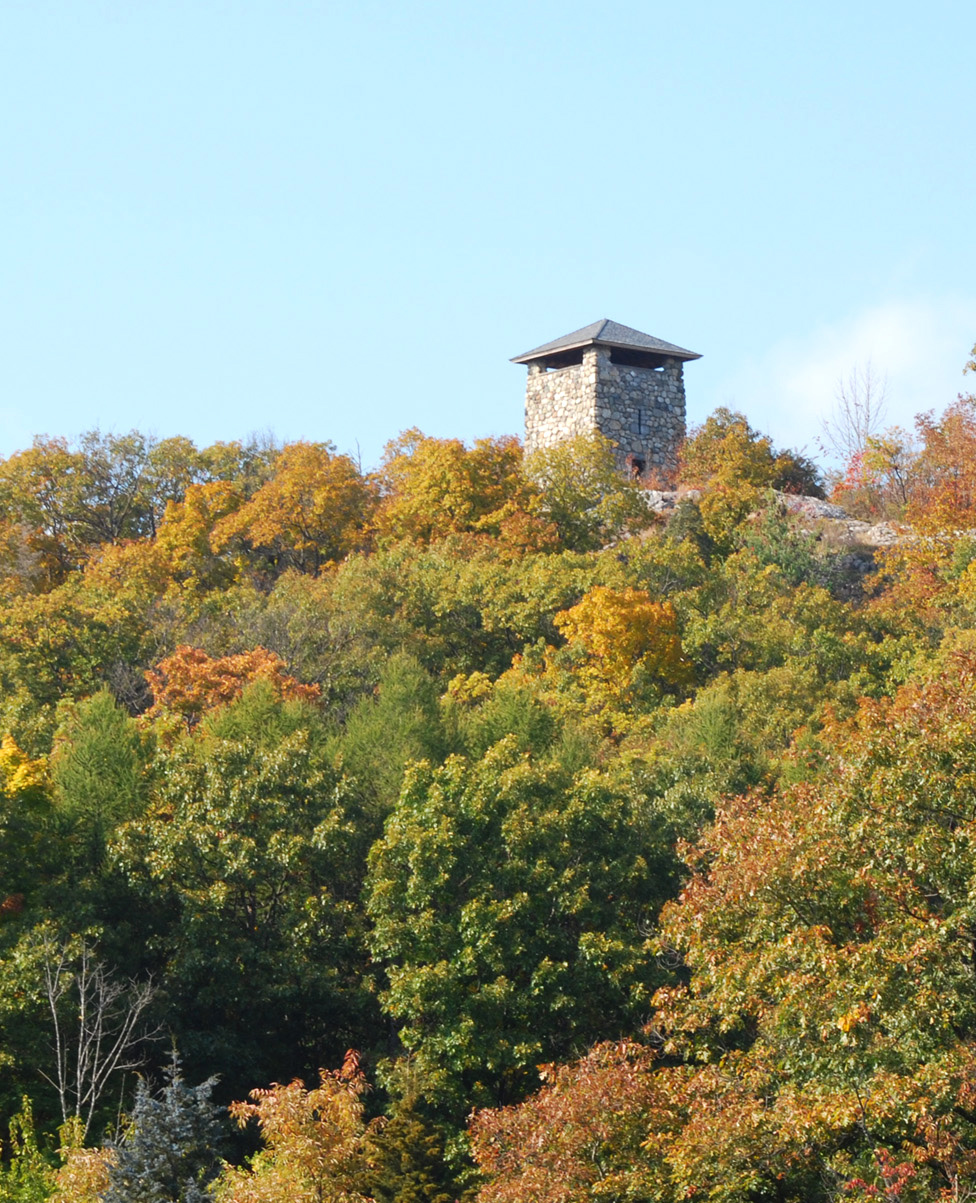
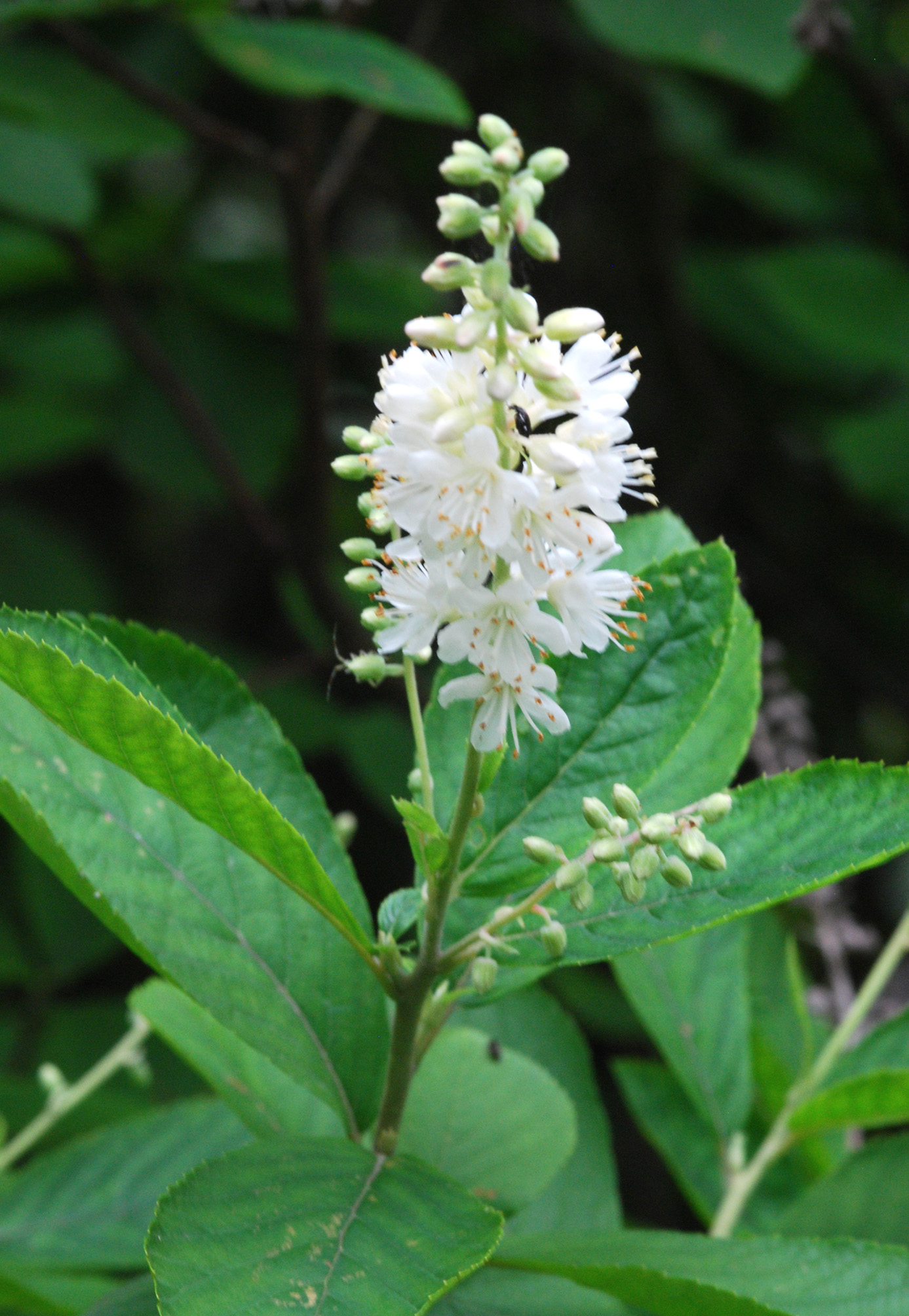
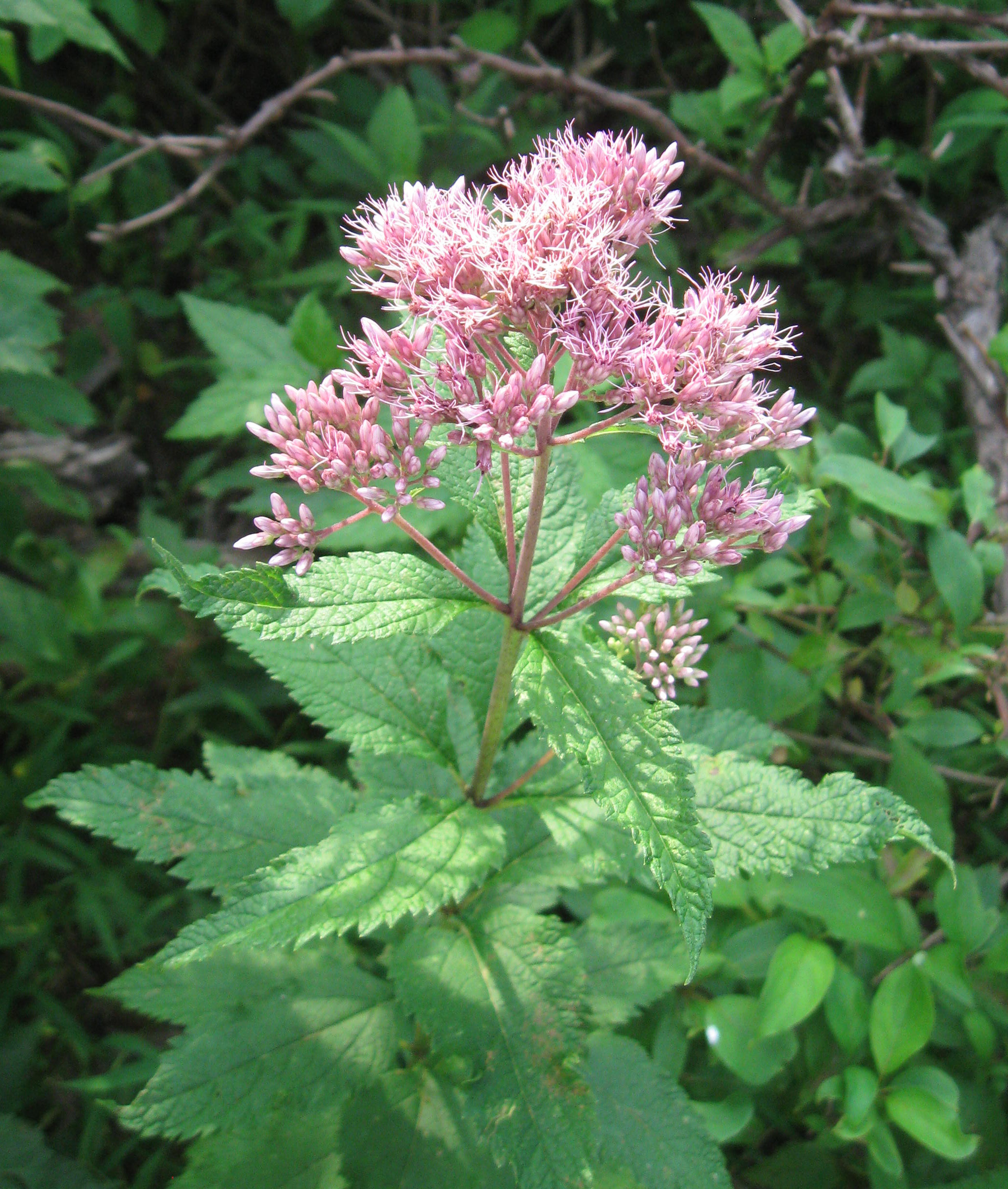
Welcome to this website. The Fells are the Middlesex Fells, over two thousand five hundred acres of forest, craggy hilltops, lakes, ponds and streams about five miles north of downtown Boston but still well inside the route 128 ring-road. Not many large cities, anywhere in the world, have such an area of wildness within the urban area. The purpose of this website is to inform any prospective hiker, casual walker or biker, if you slow down every now and then, what to look for, what to expect to see, any given month of the year.  I specialize in photographing the wildflowers that are in surprising abundance in the Middlesex Fells, but I hope that this might develop into a more comprehensive and communal site where others also report their findings of the nature of the Fells both animal and vegetable. Indeed this is already happening. What have you found in the Fells? Do let us know.  bryan.hamlin@comcast.net


Columbine Join me for a modest hike in the Fells
Saturday, May 3rd, 10: 00 - Noon
First signs of Spring

Meet at gate 8 on South Border Rd in Medford
Steady rain postpones to Sunday

Saturday, May 17, 10:00 - Noon
Lady Slipper Orchids and more.

Long Pond parking lot, top of
South Border Rd, Winchester

Questions: call me on my cellphone
781 854 2058
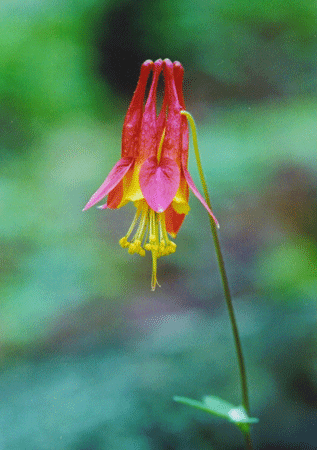
Wild Columbine  Aquilegia canadensis
photo taken in the Fells, May 2003


For more detailed, general information about the Middlesex Fells please go to the website of the Friends of the Fells by clicking here at www.fells.org  It is there that you can order a map, which is essential for hiking in the Fells - and it comes free if you join the Friends. And it is there that you can learn about organized hikes (geology, birds, plants, animals), our battles against inappropriate development and other threats, and the history of the 19th century visionaries who fought so hard to create the Fells reservation and thus preserve it for our enjoyment today. The Middlesex Fells is administered by the Massachusetts Department of Conservation and Recreation (DCR) which also has a page about the Fells on its website at: www.mass.gov/dcr/parks/metroboston/fells.htm

Below is a list of months linking you to a description, plus photos, of what can be found in the Fells each month of the year.

Another link takes you to Flower Galleries of photos of native plants of the Fells with blooming times.  There you can see more images than shown on the monthly pages with some emphasis on the more unusual as well as the 'good-looking' plants. 

In addition, further down on this page, there is reference to the two main floral surveys conducted in the Fells over the years with some ideas of how different ones of us might contribute to this monitoring in the future. So keep watching this space! Inquiries, comments and news of what you've seen are all welcome and can be sent to bryan.hamlin@comcast.net

Bryan Hamlin

Click on the month of your choice for what to look for in the Fells at that time.

January
February

March 
April

May

June

July

August

September
October
November
December

For overall information on the geology, weather and all forms of wildlife in eastern Massachusetts I recommend The Natural History of Eastern Massachusetts by Stan Freeman and Mike Nasuti, published in 1998. At the back is their Massachusetts Natural Calendar describing, month by month, what wildlife activity is occurring in the region, some of which applies to the Middlesex Fells.  For those who enjoy the changes in the seasons I strongly recommend an old but great book - Sundial of the Seasons by Hal Borland, a selection of his outdoor editorials from The New York Times, published by J B Lippincott in 1964. Borland brilliantly catches the mood of the different seasons and gives much old lore on plants and animals. A great read. 


For the Fells Native Flower Gallery   click here

 for flowers in March, April and May and here  for flowers blooming in June & July, and here  for August through November.


PLS 


    I have two 45 minute power-point presentations
         on the Fells, using many of my photographs.
     
     The first is entitled Spring in the Middlesex Fells  
     and covers the period from March through June.
      The second is entitled Summer and Fall in the Fells.

       I have presented to several garden clubs and libraries
        in the area. For bookings contact me at
         bryan.hamlin@comcast.net   or 781 395 7722


  Pink Lady Slipper, Cypripedium acaule    


Floral surveys of the Middlesex Fells


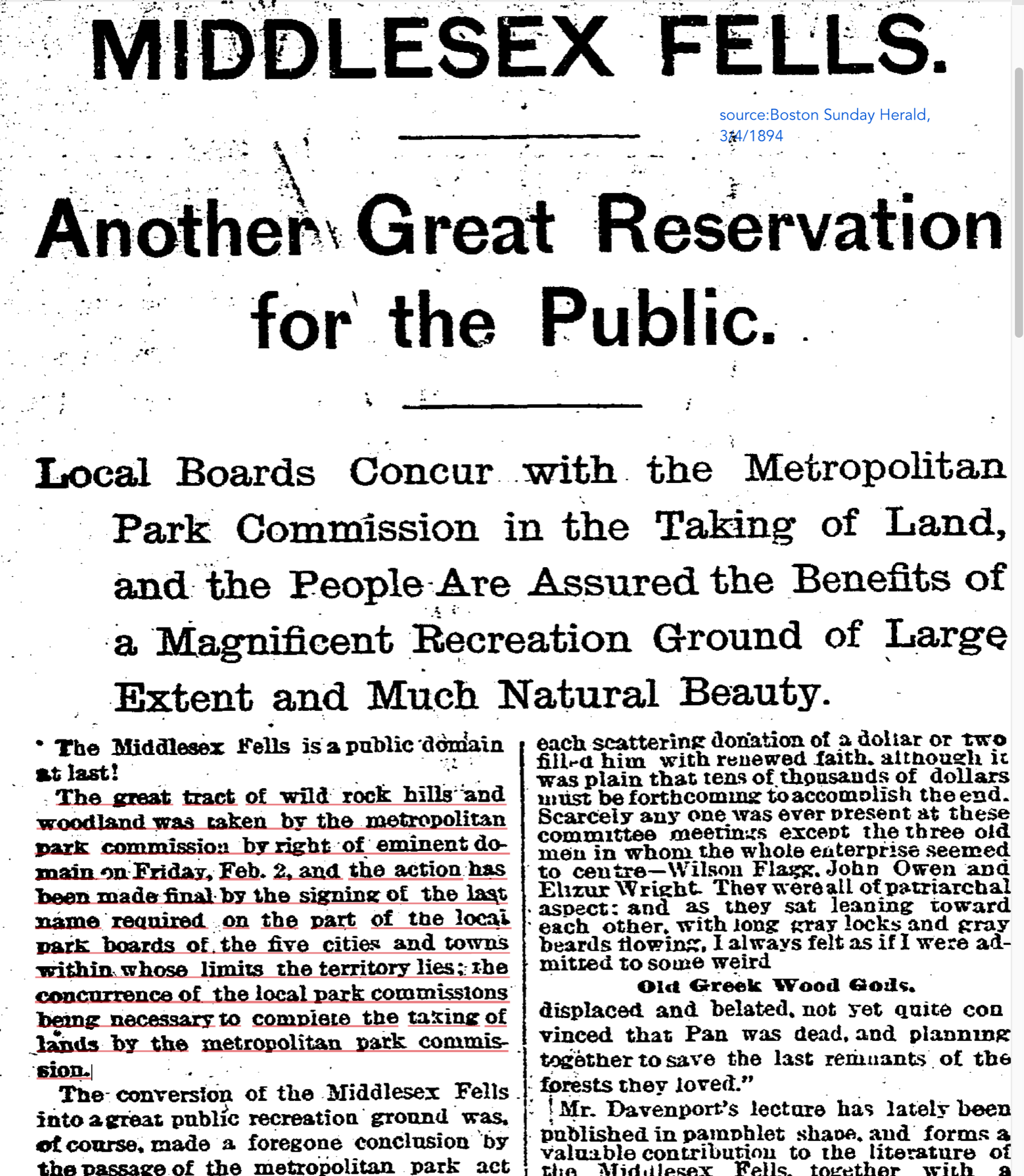
Upon creation of the Middlesex Fells as a reservation in 1894 a floral survey was conducted by Walter Deane and colleagues and published in 1896 1. We owe a great debt to these pioneers for providing us with this base-line of what plant species existed at the start 110 years ago. Here is the map of the Fells that accompanied Deane's Flora.

               Deane's map

                        reproduced by permission from the archives of the  Gray Herbarium, Harvard University

Much has happened to the Fells since then. New, wider roads have been created carrying a lot of traffic, in particular I-93 forming an almost solid barrier between an east and west Fells. An electric railway line has come and gone (1946), and the soap-box derby track at Sheepfold is still in evidence. Although land has been lost to the road widenings,  the creation of Stoneham Zoo and, to some extent, Wright's Park, there have been a few gains as well, most significantly the addition of Lawrence Woods in the southwest. General Samuel C. Lawrence, the first mayor of the City of Medford, owned a huge estate part of which was wooded. The public were welcome into these woods so that they served as an unofficial annexe to the Fells in the early years. General Lawrence died in 1911 and in 1925 this wooded part, now known as Lawrence Woods, was officially added to the Fells.

For more details on the first forty years of the Fells I recommend Round About the Middlesex Fells published by the Medford Historical Society in 1935. Compared with the original condition, where there were more fields and open spaces, the Fells have been allowed to go back to a reasonably natural state with re-growth of forest as well as much tree planting in the early part of the 20th century. But in the first decade of the 20th century the trees of the Fells were hit very badly with gypsy moth infestations. More recently there have been serious fires, human usage is on the increase and invasive species have made their encroachments. All these things have brought, and will continue to bring, changes to the flora of the Fells. Between 1920 -1922, a Mr Kidder collected many plant samples in the Fells which are now held at the Harvard Herbarium. He did not publish a report. 


As the centenary of the reservation approached, a survey of flowering plants was made by Brian Drayton through three growing seasons between 1990 and 1992 (Drayton and Primack, 1996) 2.  Drayton compares what he found to what Deane had found a century earlier, noting in what location he found particular plants. Most interesting are the lists of those plants found by Deane but not found by Drayton, and vice versa. Sadly, but not too surprisingly, the former is the longer list.  It should be noted however that Drayton confined his area of survey to west of I-93 and north of South Border Road, therefore only about 40% of the present total. Not all subsequent reporting on Drayton's work has taken sufficient note of this. Because of a difference in the underlying geology between West and East Fells, there are quite a few species only found, and still found, in the eastern part. This means that there has been no published survey east of I-93 since the original Deane survey, and never any published survey of Lawrence Woods. We are now working on a full plant survey of all the Fells.


Our team now consists of Betty Wright (trained by the New England Wildflower Society), Irina Kadis of the Arnold Arboretum, and Don Lubin, one of the leading authorities on ferns in New England, and myself. In 2007 we have received great help from  Walter Kittredge of the Harvard Herbarium, and Alexey Zinoviev, an expert, amongst other things, on willows. This is truly, and needs to be, a team effort.

 We have refound several species earlier reported as having disappeared from the Fells, as well as identifying others not reported before.  By October 2007 we had between us identified approximately 660 species of vascular plant and intend to continue for one more year before publishing our results. 


Everyone's help is needed. If you think you've spotted something unusual, please let us know. In this regard, grateful thanks to Mia MacCollin, Dana and Inge Jewel, Joyce Kreider and Joe Hayes for pointing me to the location of some special plants. We all have an eye for different things and some will know more about trees and shrubs, others about grasses, or invasives, and each will have knowledge about their favorite part of the Fells. 

Sadly but inevitably some native species have been lost over the past 110 years, due to various factors. But there is no evidence that the overall diversity, i.e. the total number of plant species, has diminished.  We welcome your comments and news of discoveries. bryan.hamlin@comcast.net

I propose eight sectors, numbered as such on the map below, as a way of subdividing the Fells into reasonably natural but more manageable areas.


        map of the Fells

         The basic map image is reproduced with permission of the Friends of the Fells

The reasons for dividing this 2,500 acre reservation into 8 sectors are: to provide manageable parcels of territory of approximately equal size (often divided by roads) for search purposes; providing a measure of frequency of plant occurrences; and to enable comparisons with previous surveys. For example, Drayton & Primack surveyed the equivalent of sectors 2, 3 & 4; Deane surveyed all but sector 1.

Although in many cases the sectors are clearly delineated, e.g. sectors 1, 6 & 7, in other instances a less obvious boundary exists and I have had to make the best calls I could which are described here below in more detail than on the map. Except for some ardent botanist who has found an unusual plant on an ambiguous boundary line, some of these details should be of little concern.

Of course within these sectors there are different types of habitat from swamps and ponds to rocky hill-tops with consequent differing plant life.  


  1. Lawrence Woods, all that is south of South Border Road in the SW corner of the Fells.
  2. Long Pond-Nanepashemet Hill area. Basically what’s west of the Winchester reservoirs.  The boundary between  2 and 4  is the road going in from  South Border Rd to the southern tip of South Reservoir and running east of the small pond there.  
  3. Bear Hill-Sheepfold area. North and east of the reservoirs and West of I 93 down to Brooks Road.  It includes Money Hill in the north and the 'island' between Middle and South Reservoirs with the boundary there between sectors 3 and 2 being where the causeway from the west meets the 'island'.  The other arbitrary boundary divides sectors 2 and 3 north of Wanapanaquin Hill by running an imaginary line from the northeast inlet of Middle Reservoir across to the west shore of North reservoir.
  4. Straight Gully Brook-Pine Hill area, south of Brooks Road and north of South Border Road and west of I 93. Brooks Roadis a major carriage road forming most of the northern boundary of sector 4. Where Brooks road dips southwest before reaching the shore of South Reservoir, an imaginary line needs to continue to the shore.
  5. Wrights Pond area. Wrights Park is strictly not part of the Fells reservation but despite ( and with the exclusion of ) the beach and associated facilities, the rest of the Park is of great botanical interest and is seamless with the surrounding Fells land, particularly to the north of the pond. I propose that this sector include the south shore of Spot Pond and Quarter Mile Pond. See sector 8 description. The boundary with sector 8 in the NW corner of 5 is the Medford-Stoneham town line that runs west from the tip of the cove to the road, route 28. 
  6. Cairn Hill-Black Rock sector including the High Reservoir and the Covered Reservoir. Everything east of Woodland Road and south of Ravine road, both sides of Fellsway East but not including the privately owned Medical Center land. 6a west of Fellsway East, 6b that part that is east.
  7. Whip Hill-Virginia Wood sector. North of Ravine Road and East of Pond Street and Woodland Road. 7a for Virginia Wood, 7b for the Whip Hill area north of Pond St including Doleful Pond. I propose not including Whip Hill Park. It is a much more recent addition, with only one part bordering the Fells proper, and its inclusion would take in a lot of garden and imported horticultural species.  
  8. Spot Pond sector. In area this is mostly the reservoir but it also includes the islands and the west, north and east shorelines, including Deer Hill, the Botume House grounds and the area northwest of Spot Pond west of route 28 but east of I-93. It should not include the Stone Zoo.  The boundary in the south east corner of this sector with sector 5 is a path that leaves the Woodland Rd footpath near the top pf Quarter Mile Pond and runs down to near the northeast tip of the pond, across a stream to the shore of Spot Pond.


1. Walter Deane ed. Flora of the Blue Hills, Middlesex Fells, Stony Brook and Beaver Brook Reservations of the Metropolitan Parks Commission, Massachusetts. 1896


2. Drayton, B. & R. B. Primack. 1996. Plant species lost in an isolated conservation area in metropolitan Boston from 1894 to 1993. Conservation Biol. 10, No. 1: 30-39.